Perovskite Solar Cells & Inkjet Printing
Perovskite solar cells are considered one of the most promising developments in photovoltaics. In combination with inkjet printing technology, they enable precise, material-efficient, and scalable production of functional layers—digitally controlled and without mask-based processes. This technology opens up new avenues for flexible, lightweight, and design-integrated solar solutions.
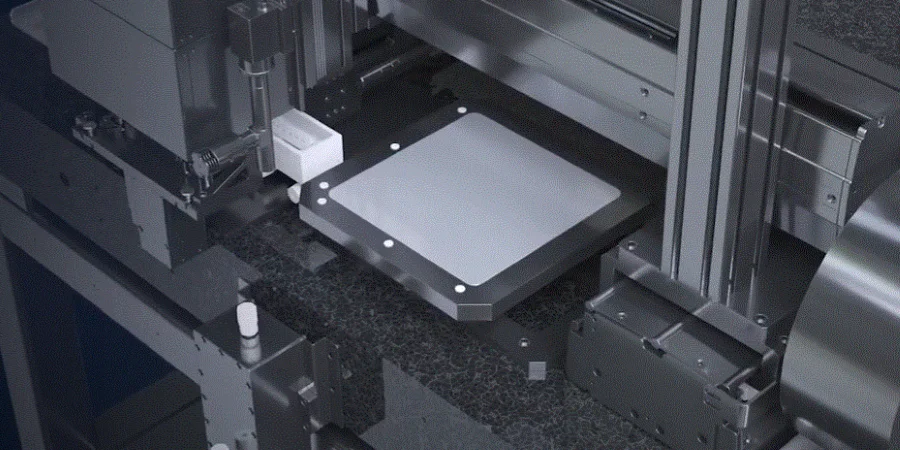

Panasonic is one of the leading industrial companies conducting intensive research into perovskite solar cells and inkjet-based coating processes. Research projects have already demonstrated large-area perovskite modules with high efficiency levels—an important step toward industrial application.
Daiichi Jitsugyo (America) is a distributor of selected Panasonic inkjet systems and supports customers in using these technologies in research, process development, and pilot production. The focus is on:
- Providing high-quality Panasonic inkjet printing systems
- Technical advice on system selection and integration
- Support in the implementation of precise coating processes
Daiichi Jitsugyo (America) thus provides access to proven Panasonic technology for the development and qualification of modern perovskite solar cell processes.
Products
Inkjet Printer for R&D
Panasonic
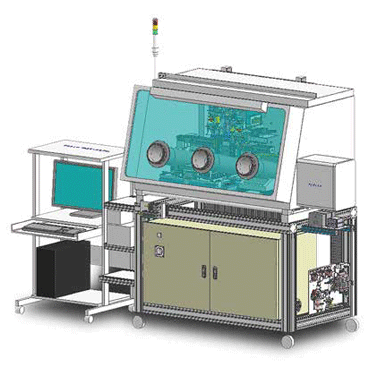
The Inkjet Printer for R&D by Panasonic, distributed by Daiichi Jitsugyo (America), is a compact inkjet printing system designed for inkjet process development and device prototyping. The system provides the essential functions required for R&D environments, including circulation-type ink supply, selectable inkjet heads, and ink jetting observation. It is suitable for installation in controlled environments such as glove boxes (glove box not included) and supports stable printing with small ink volumes, making it ideal for material development and early-stage process validation.
-
High-Precision Printing: Panasonic heads with up to 1200 dpi resolution, supporting multi-pass, bidirectional printing, and TIFF-based data input via a Windows PC.
-
Advanced Droplet & Gradation Control: Dual control boards offer 256-step DPN volume adjustment and waveform-based gradation for ultra-fine jetting accuracy.
-
Specialized Ink Handling: Supports solvent and UV inks (1–2 types) with a circulation system optimized for particle-containing fluids and ultra-low volumes (≤ 50 mL).
-
R&D Focused Hardware: A compact, glove-box-compatible design featuring a 150 × 150 mm stage, real-time jetting observation, and automated simulation of mass-production conditions.
-
Safety & Maintenance: Includes an integrated stage-drive transport system, built-in maintenance routines, and an emergency stop function.
-
Process & Material Development: Optimized for developing ink jetting conditions, waveforms, and advanced material/process verification.
-
Prototyping & Small-Batch Production: Designed for creating device samples, functional coatings, thin-film applications, and small-batch functional printing.
-
Performance Evaluation: Enables detailed evaluation of ink ejection behavior and early-stage process testing.
-
Specialized Environments: Engineered for high-stakes R&D within controlled or inert environments, such as glove boxes.
RtoR Inkjet Printing Unit
Panasonic
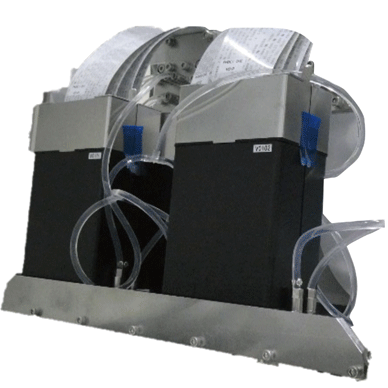
Panasonic’s RtoR Inkjet Printing Unit, distributed by Daiichi Jitsugyo (America), is a modular inkjet printing system for research and development, process verification, and series production. The unit can be flexibly integrated into existing systems and supports both stage drive and roll-to-roll (RtoR) mechanisms. Thanks to selectable Panasonic inkjet heads, circulating ink supply, and intelligent control functions, the system is suitable for high-viscosity inks, large drop volumes, and high-resolution printing applications in industrial environments.
-
Versatile Inkjet Engineering: Supports Panasonic heads capable of 1200 dpi resolution, handling droplet volumes up to 200 pL and high-viscosity inks (up to 100 mPa·s with heating).
-
Precision Jetting Control: Features DPN or gradation control, droplet position correction, and non-ejection nozzle compensation to ensure high-definition output.
-
Dynamic Synchronization: Enables real-time data updates and synchronous printing via internal or external triggers (pulse generator, encoder, or sensors).
-
Industrial-Grade Infrastructure: A robust design supporting both stage-drive and roll-to-roll transfers, integrated PLC/Windows control, and a standard 67.5 mm printing width.
-
Fluid Management & Maintenance: Includes a circulation-type ink supply for solvent and UV inks, with optional automated head wiping and jetting observation units.
-
Industrial Mass Production & Verification: Engineered for high-volume manufacturing, custom equipment integration, and the transition from R&D to full-scale production.
-
Advanced Material & Thin-Film Development: Optimized for functional coatings, printed electronics, and the development of specialized thin-film materials.
-
High-Viscosity & Large-Droplet Applications: Specialized for handling complex fluids and processes requiring significant ink deposition.
-
Versatile Coating Processes: Supports both discrete workpiece processing and continuous roll-to-roll coating workflows.
Small Inkjet Printer for Development
Panasonic
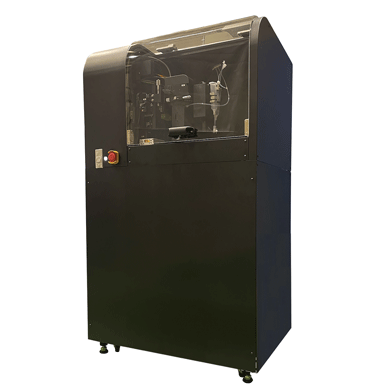
Panasonic’s “Small Printer for Development,” distributed by Daiichi Jitsugyo (America), is a high-precision inkjet printing system for material development, device prototyping, and process verification. The system enables the uniform application of functional thin films and patterns on flat and structured substrates. Thanks to its circulating ink supply, DPN technology, and observation functions, it is ideal for demanding applications in electronics, semiconductor technology, and materials research.
-
Precision Jetting & Control: Employs Panasonic heads with DPN technology for individual nozzle control, delivering 600 dpi resolution and high-accuracy printing (up to ±8 µm).
-
Advanced Fluid Architecture: Features a circulation-type ink system with optional heating and high-precision automation, optimized for solvent, UV, and high-viscosity fluids.
-
Versatile Process Support: Supports single-pass and multi-pass printing on substrates up to 200 × 200 mm, with integrated monitoring for both droplet flight and landing behavior.
-
Industrial R&D Design: A robust, Windows-controlled system featuring modular print heads and circulation units for quick replacement and maintenance in research environments.
-
Next-Gen Electronics & Display: Optimized for high-precision manufacturing of MicroLEDs, electronic components, and advanced solar cell technologies.
-
Advanced Material Research: Facilitates the development of functional coatings, decorative applications, and specialized high-viscosity adhesives.
-
Prototyping to Production: Engineered to bridge the gap between initial device prototyping and the verification of processes for full-scale series production.
-
Comprehensive R&D: A versatile platform for fundamental research and development across diverse industrial sectors.
Inkjet Printer
Panasonic
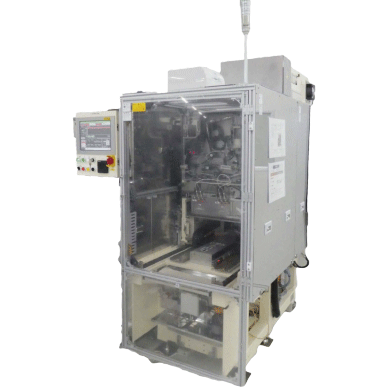
The Neo Counter X400 is an advanced offline X-ray component counting system designed to revolutionize manual counting processes in SMT operations. Combining high-resolution X-ray imaging, computer vision and AI-based algorithms, it delivers precise component quantity results in seconds and seamlessly integrates with modern production IT systems.
-
Advanced Coating & Deposition: Delivers uniform thin-film coatings on both flat and uneven surfaces, supporting single-pass reproduction on large 300 × 300 mm substrates.
-
Precision Jetting Control: Features DPN technology, positioning correction, and automatic nozzle compensation to ensure high-precision placement and up to 1200 dpi resolution.
-
Reliable Fluid Architecture: Utilizes solvent-resistant Panasonic heads and a circulation-type supply system for stable, consistent material deposition with both UV and solvent inks.
-
Flexible Operational Modes: Supports single-pass, multi-pass, unidirectional, and bidirectional printing in an industrial-grade design for both prototyping and production verification.
-
Electronics & Semiconductor Manufacturing: Specialized for functional coatings and the development of next-generation semiconductor components.
-
Mass Production Readiness: Designed to bridge the gap between initial R&D and process verification for high-volume manufacturing.
-
Precision Prototyping: Optimized for electronic device prototyping and the creation of advanced thin-film materials.
Application Areas
In inkjet printing, the functional layers of perovskite solar cells — such as the active absorber and transport layers — are printed directly onto the substrate as fine droplets without contact. This allows precise control of layer thickness, structure, and material application.
Large-Area & Flexible Solar Modules
Inkjet processes enable scalable production of large-area perovskite modules on both rigid and flexible substrates, suitable for industrial deployment.
Building-Integrated Photovoltaics (BIPV)
Applications in facades, windows, and architectural surfaces where design integration, flexibility, and lightweight construction are critical.
Research & Pilot Plants
Development and validation of new PV concepts in controlled laboratory and pilot-scale environments with high reproducibility.
Industry-Oriented Process Development
Development environments designed for scalable, automated industrial production — bridging research and full-scale manufacturing.
Advantages of Inkjet Printing
Highest Precision
Digital droplet control enables reproducible, uniform functional layers — crucial for efficiency and consistent quality.
Material Efficiency
Additive material application reduces waste and significantly lowers overall process costs.
Process Flexibility
Suitable for glass, flexible substrates, and complex module geometries — ideal for new PV applications.
Scalability
Systems integrate directly into automated production lines, enabling industrial-scale perovskite manufacturing.
FAQ
What are perovskite solar cells?
Perovskite solar cells are an innovative photovoltaic technology based on crystalline semiconductor materials with excellent optoelectronic properties. They offer high light absorption and strong performance potential with cost-efficient manufacturing possibilities.
Why is inkjet printing used for perovskite solar cells?
Inkjet printing enables precise, contactless, and additive deposition of functional layers. Material is applied only where needed, allowing accurate control of layer thickness while reducing material consumption and process waste.
Which layers can be printed using inkjet technology?
Typically the perovskite absorber layer, transport layers (such as the electron transport layer), and other functional interlayers — depending on ink formulation and process design.
Is this technology already used in industrial production?
Inkjet-printed perovskite solar cells are positioned between research, pilot production, and industrial process development. Many applications are already tested industrially while efficiency and long-term stability continue to improve.
What role does Panasonic play in this field?
Panasonic is one of the industrial leaders actively researching perovskite solar cells and inkjet-based coating processes, having demonstrated large-area perovskite modules with high conversion efficiencies.
What is DJA USA's role?
DJA USA acts as a distributor of selected Panasonic inkjet systems, supporting customers in research, process development, and pilot applications related to perovskite solar cells.
Who are Panasonic inkjet systems suitable for?
- Research institutes and universities
- Industrial R&D departments
- Pilot lines and technology development teams
- Companies focused on advanced coating processes
Which substrates can be processed?
Inkjet printing is highly versatile and can be applied to glass, coated substrates, and flexible films — depending on the system configuration and process requirements.
Contact Daiichi Jitsugyo (America)
Interested in our Panasonic inkjet systems for perovskite solar cell development? Our team provides technical consultation, system selection support, and application guidance.
We support customers across research, process development, and pilot production environments.
- | Daiichi Jitsugyo (America)®, Inc.
- | 630 361 6044
- | Plant & Energy Machinery Sales - PED@djausa.com
- | 425 North Martingale Road, Suite 1110 Schaumburg, IL 60173